What your child is taught
The curriculum your family chooses, from kindergarten phonics to calculus, taught one-to-one at your child's real level in each subject. Our standards are what it's measured against. This page covers what a lesson actually looks like, how it adapts, and what stays in your hands.
Same curriculum. Different place in it for each subject.
On the Standards page you met one of our team's kids: 10 years old, enrolled in 5th grade, working on 5th-grade math and 7th-grade language.
Here's what that means for his curriculum. His math lessons are 5th-grade lessons, with extra review built in where he's still building. His language lessons are 7th-grade lessons, because that's where he actually is. Both come from the same curriculum. Placement decides where he starts in each subject, and mastery decides when he moves.
In a classroom, one pace has to fit 22 kids and every subject. Teaching children at their actual level, instead of their grade, raised test scores across 13 randomized trials, and the students furthest behind gained the most. 1
Two ways in
You can bring the curriculum you already use or use ours. The teaching, the standards, and your controls are the same either way.
Use your own curriculum
We license homeschool curricula and build them into the platform. Your child works through the program you picked, in its order, with its books. Knowly handles the teaching, grading, and pacing, and ties each lesson to the matching standard so you can see where the program covers it.
Use Knowly's curriculum
Written directly to our standards, K–12. It's the simplest option if you're new to homeschooling, switching programs, or pulling a child out of school mid-year and need to start this week.
- Placement in each subject on day one
- One-to-one lessons every day
- Mastery before moving on
- Scheduled review of mastered skills
- Your values profile and book approvals
- Standard-by-standard reporting in the parent portal
Inside a lesson
Every lesson follows the same six steps, whatever the subject or grade. Each step is there because of what the research says about how children learn. Pick an example to see it play out.
How the curriculum adapts
The curriculum's content stays the same. What changes is where your child is in it, and how much time they spend at each point.
They move into the next grade's material
Once they master their grade's standards in a subject, lessons continue into the next grade's standards in that subject. Their other subjects keep their own pace.
It finds the missing piece underneath
If a skill isn't sticking, the platform checks the earlier skills it depends on and teaches whichever one is missing before going back.
It comes back for review
Mastered skills come back on a schedule. If one slips, it goes back to Climbing, and the portal tells you why it returned.
You find out the same day
Each problem has an expected time range based on its difficulty and your child's pace. Answers that come in too fast are flagged, and a pattern of rushing triggers a parent alert.
If math is the subject you worry about
You're not alone. Three decades of homeschool research point the same way: homeschooled students tend to do well in reading and less well in math, and they're less likely to choose STEM majors in college. 6 The researchers point to how math gets taught at home, not to the kids.
Math is where gaps stack up fastest and are hardest to spot from the kitchen table. Mastery checks and standard-by-standard reporting catch a gap the week it opens, not at the end of the year.
How you'll know it's working
In one national survey, 9 in 10 parents said their child was at or above grade level. Test scores say many of them were wrong, in both directions. 7
On Knowly you don't have to guess. The parent portal shows every standard for your child's grade or course and whether it's mastered, in progress, or not started. Choose how involved you want to be, from a weekly summary to watching lessons live.
Your family's values
We don't pick your family's values. You set them, and the platform follows them. Families of any faith or none use the same tools.
Values profile
Set once, change anytime. It shapes which books are suggested and how lessons are framed.
Book approvals
Nothing goes on your child's reading list until you say yes. Swap out anything you don't want.
Every lesson, open to you
See every question, answer, and grade for any lesson, or sit beside one live without interrupting.
Each day you also get conversation starters tied to what your child actually worked on. That's where the subjects that matter most to your family get talked through: at your table, in your words.
Grade by grade
Every subject, grade by grade
We have mapped every subject from Kindergarten through Grade 12. Each chart lists the topics your child will explore in each grade. Pick a subject and flip through to see the whole journey at a glance.
Reading
Stories, poems and nonfiction, grade by grade
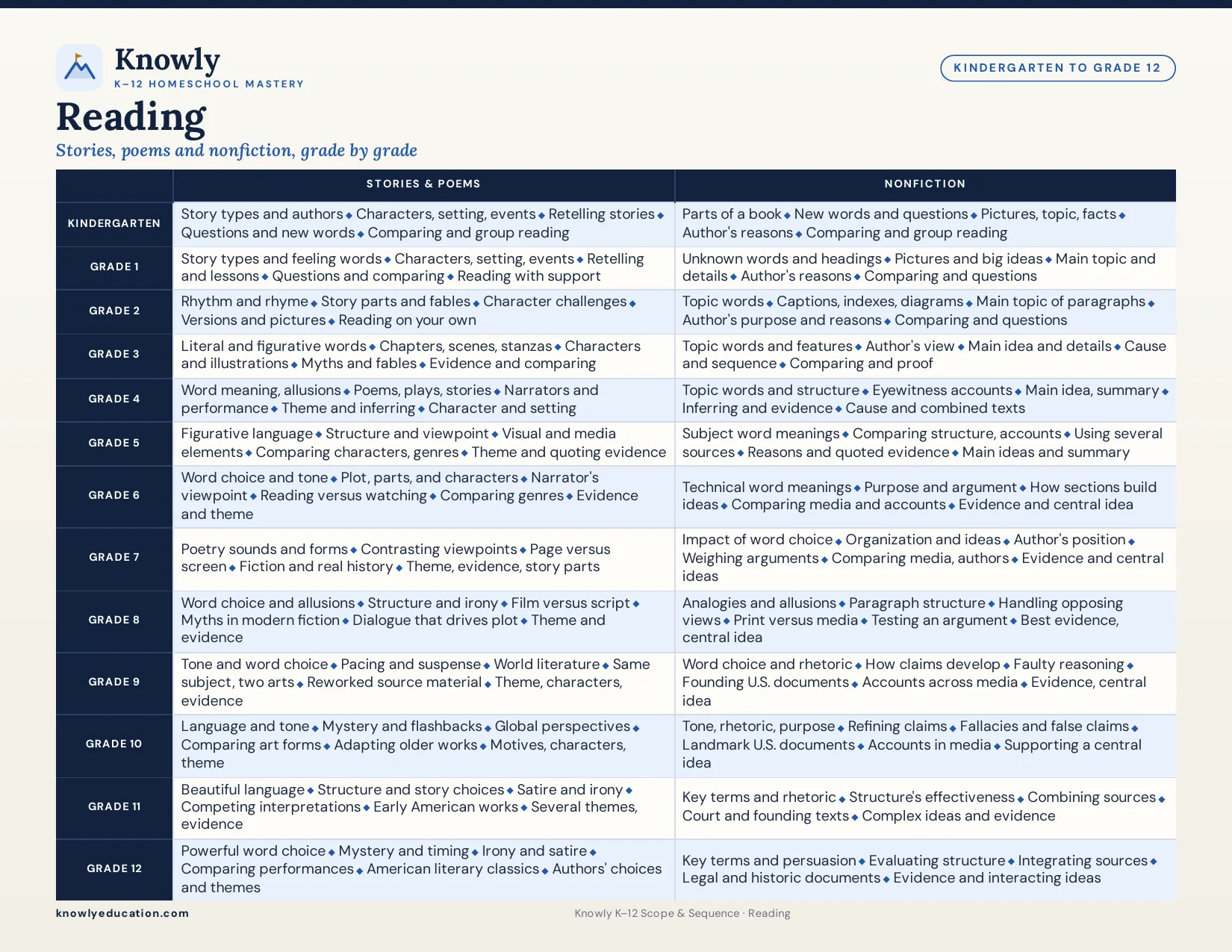
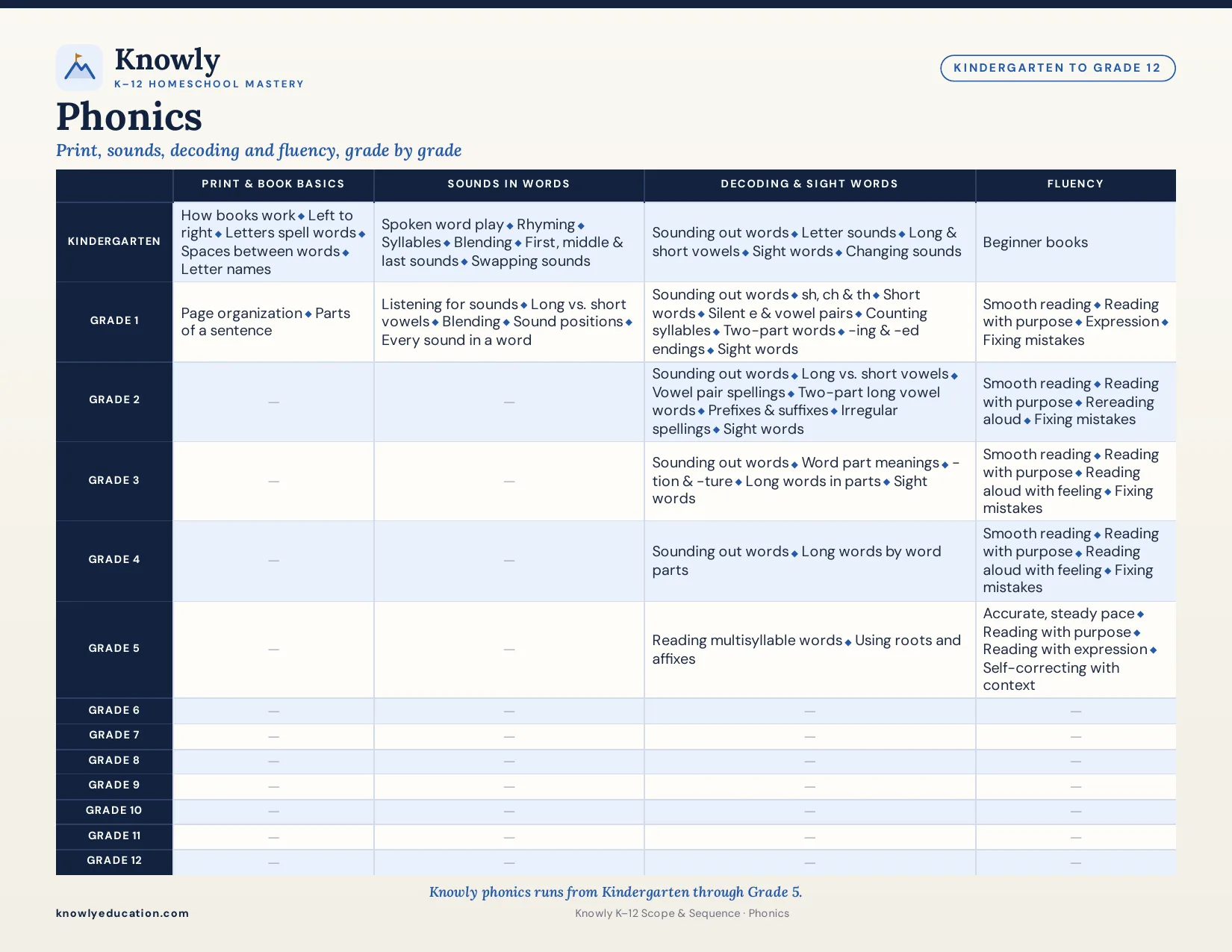
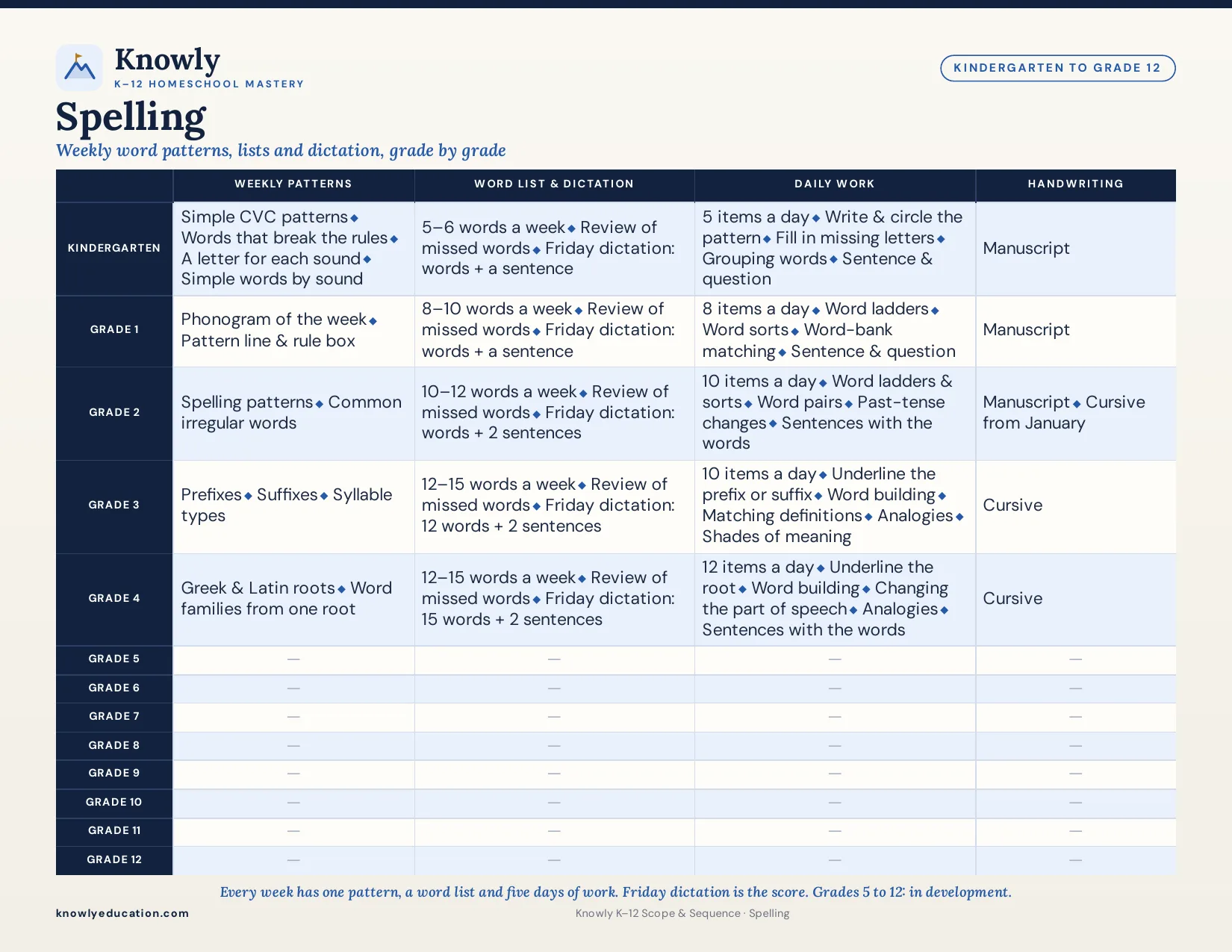
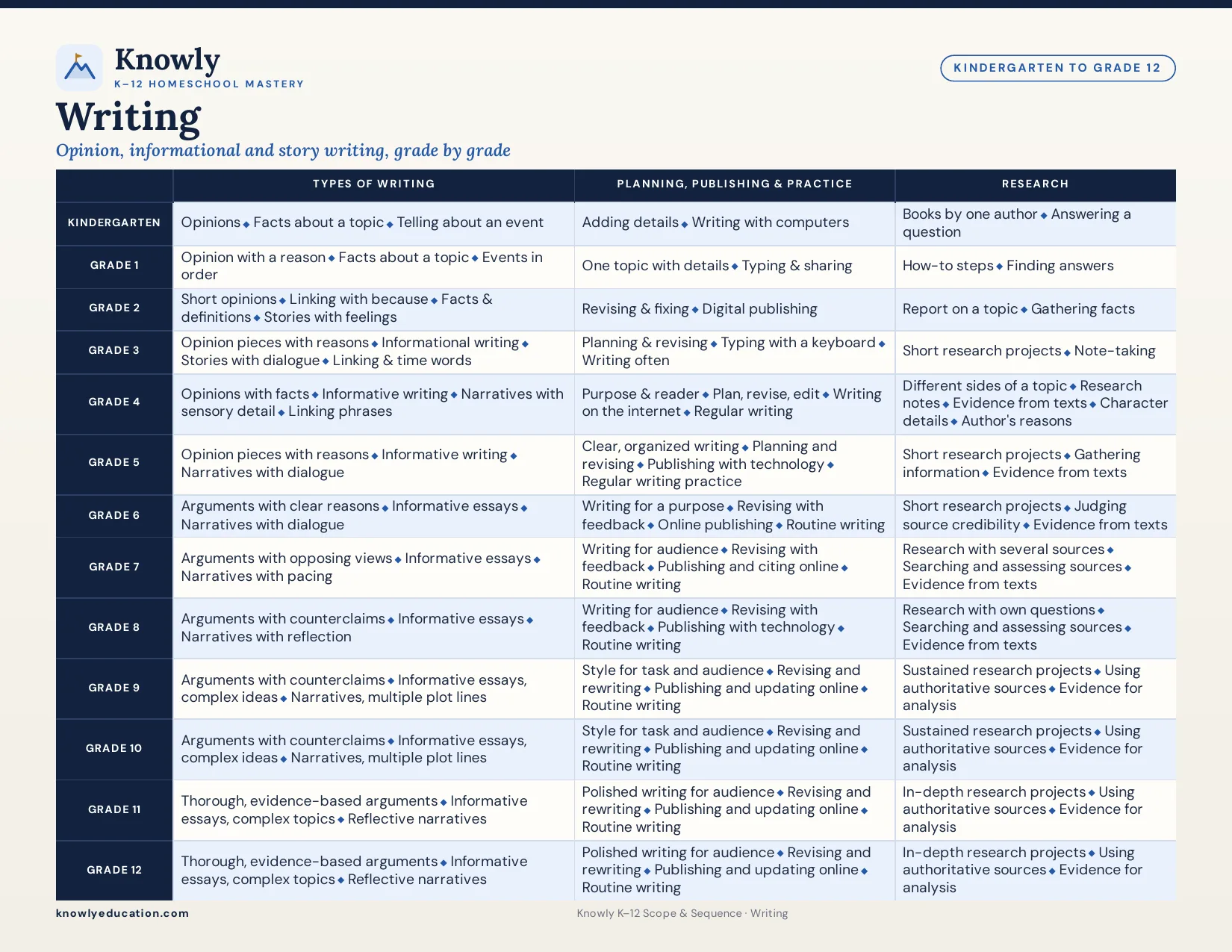
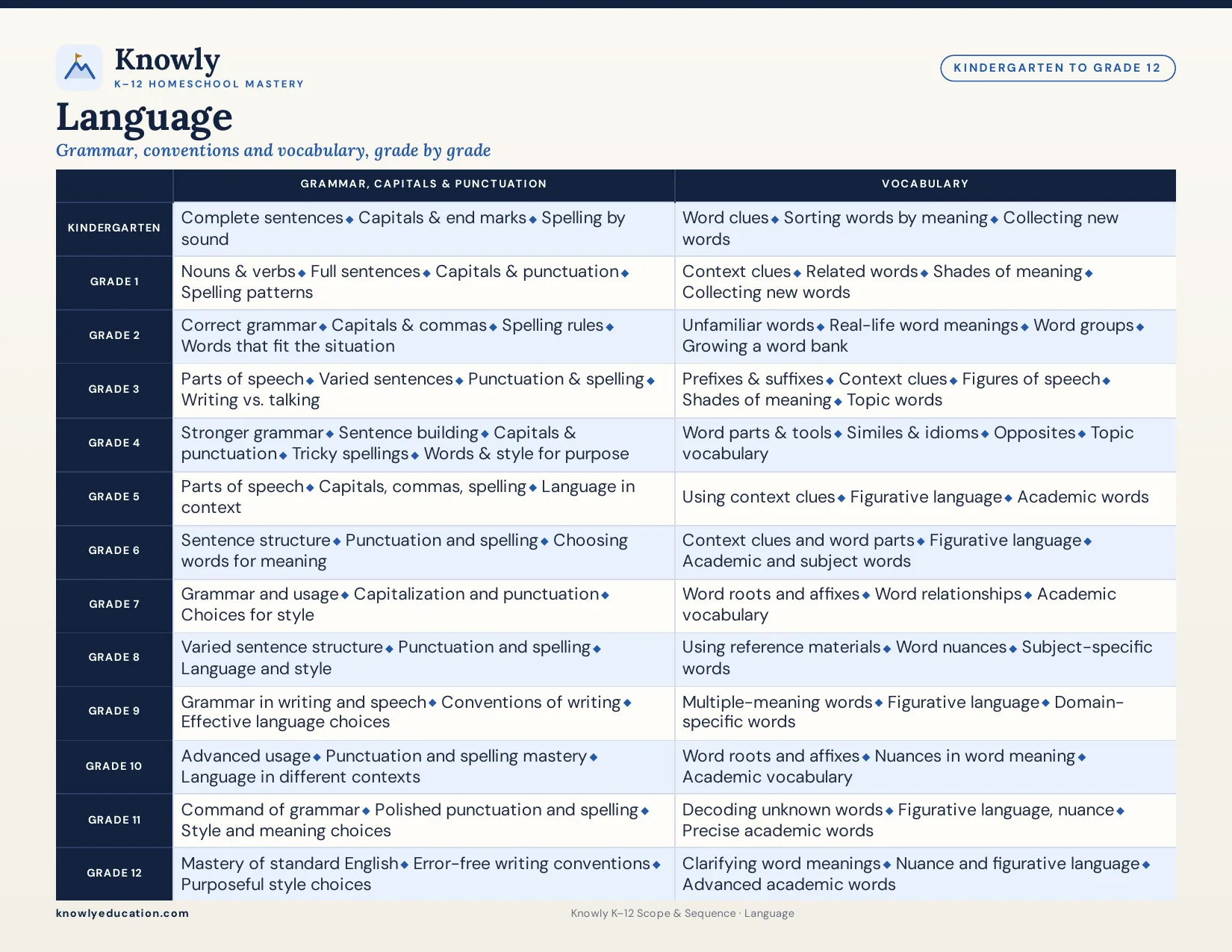
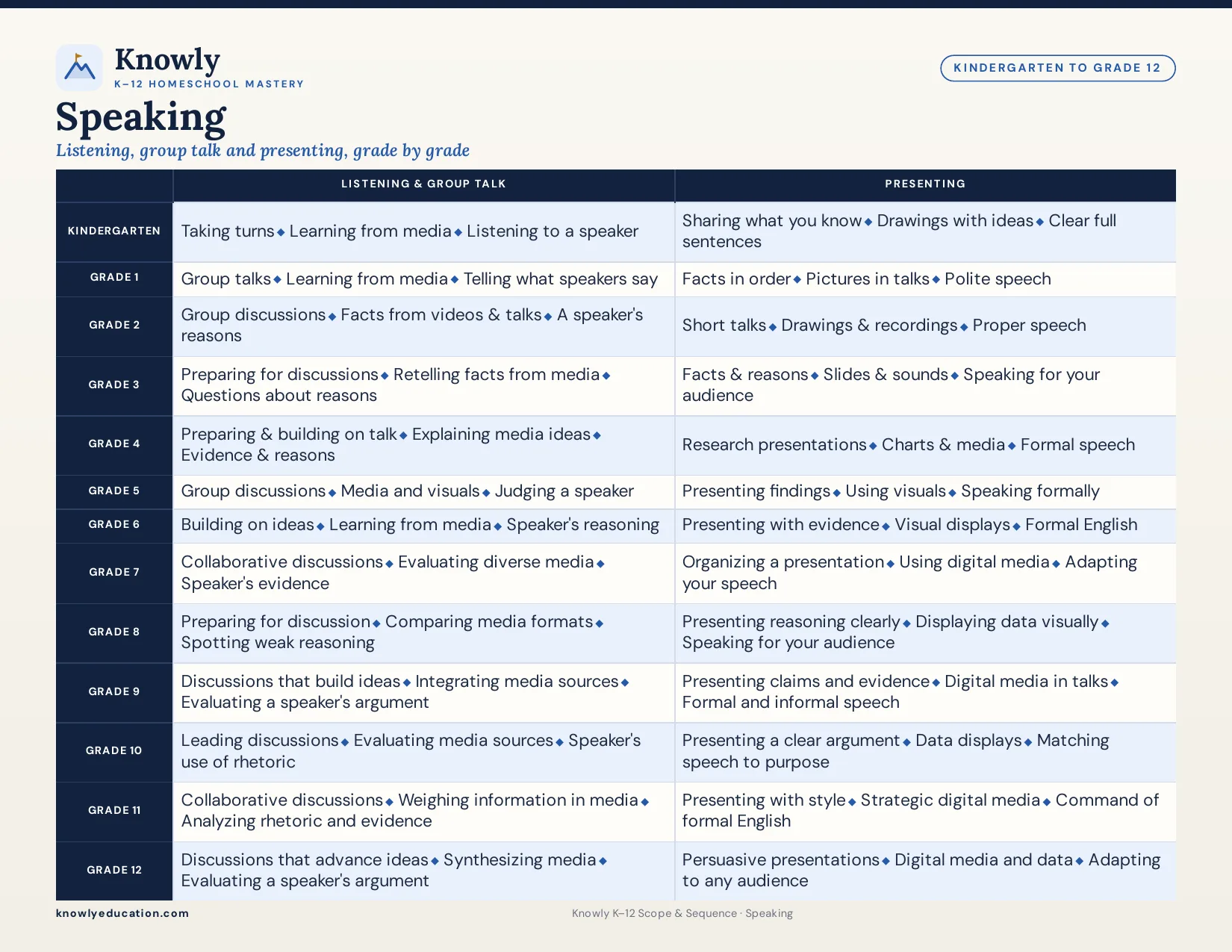
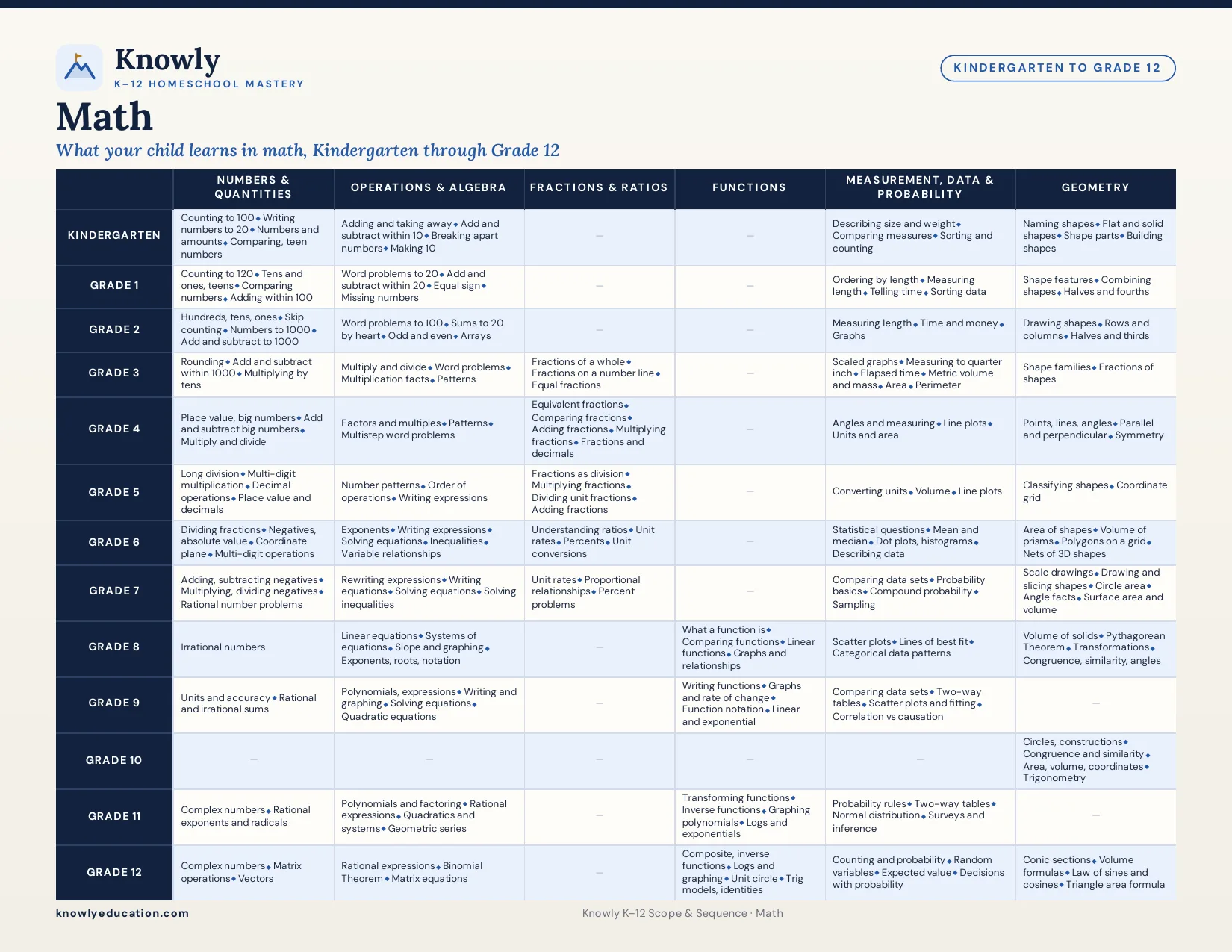
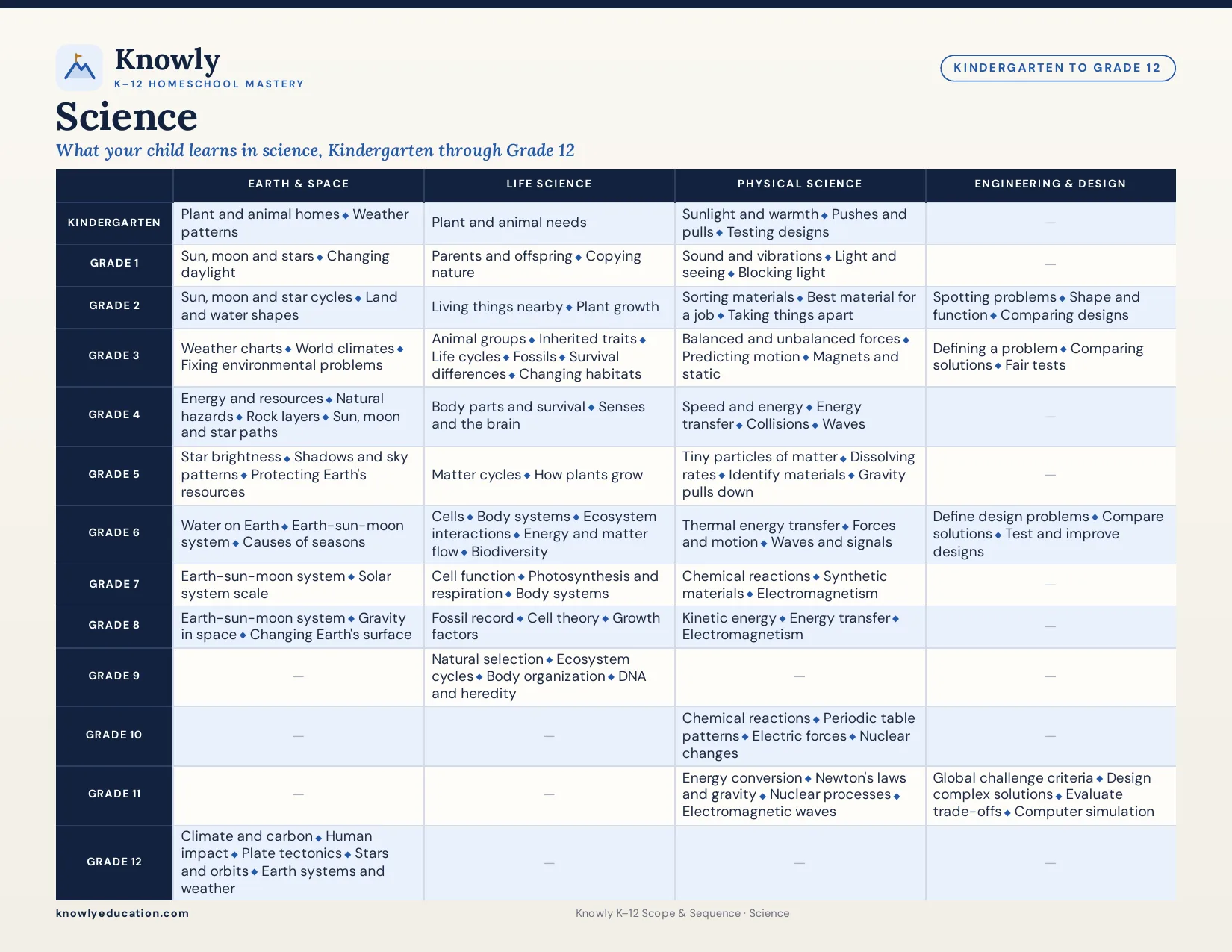
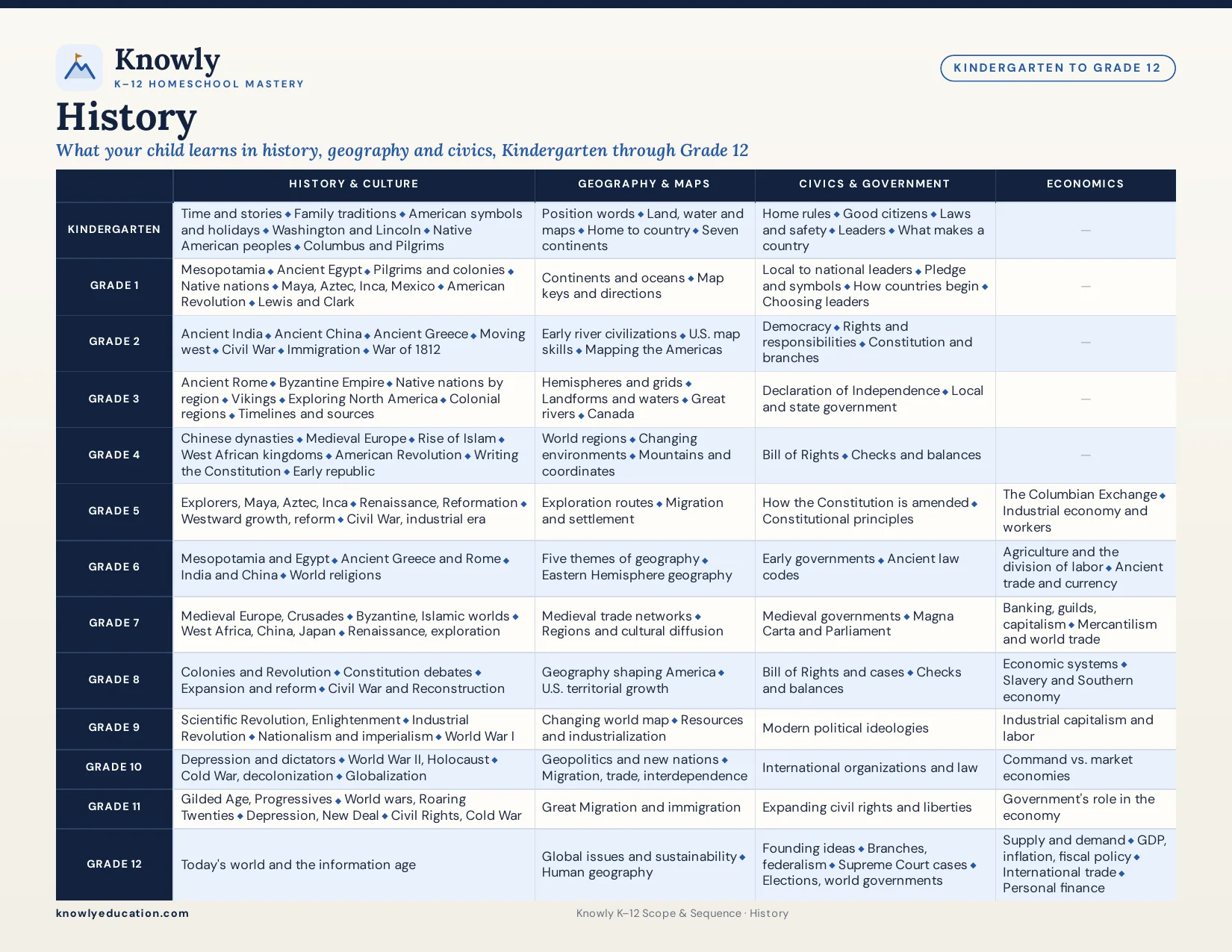
Math, reading, writing and science are available at Knowly's January 2027 launch; the full scope shows where every subject is headed.
Common questions
Do I have to give up the curriculum we already use?
Not if it's one of the programs we license. Ask during your demo and we'll tell you whether yours is on the list.
If we use our own curriculum, does Knowly change it?
No. Your child works through your program's content, in its order. Knowly decides where your child starts in it, when they've mastered a part, and what comes back for review.
My child is behind. Will this just make them feel worse?
Your child starts where they actually are, not where their grade says they should be, so each lesson is hard but within reach. In the research on both mastery learning and teaching at the right level, the students who started furthest behind tended to gain the most.
Is this a fit for a high schooler?
Yes. The same lesson structure runs through high school, with math going from Algebra I through calculus taught to the College Board's AP framework.
Does Knowly teach a particular worldview?
No. Worldview comes from the curriculum you choose and the values profile you set.
How involved do I need to be?
As involved as you want. Some parents read a weekly summary. Others check in daily or sit beside lessons. Knowly handles the teaching either way.
Want to know if your curriculum is supported?
Ask our CEO directly. Thirty minutes, and you'll see how your program looks inside Knowly.